
Automatic Cleaning System for Solar Panels
A
utomatic Solar Panel Cleaning Systems have emerged as one of the most efficient cleaning solutions to prevent dirt and dust buildup on the surface of the panels. Because, accumulation of dirt and debris reduces the efficiency of energy conversion, cleaning the panels routinely is of utmost importance to not void the warranty. You might want to check out the best automatic solar panel cleaning systems mentioned in this article.
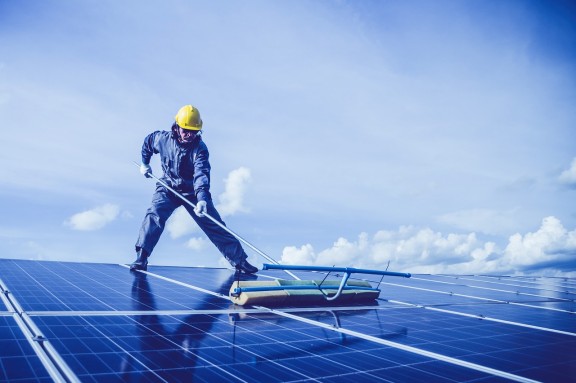
The traditional methods of manual cleaning pose multiple risks to the panels and personnel. The advancement in the technology of cleaning has produced automated cleaning systems Here, we provide you a comprehensive look at automatic solar panel cleaning systems – their mechanism, types, pros / cons and finally culminating in a selection of top the automatic solar panel cleaning systems for you to have a look at.
What is an Automatic Solar Panel Cleaning System?
An automated solar panel cleaning system is for removing dust, dirt, and other types of debris automatically from the surface of the panels for better efficiency and increased energy production. A clean solar panel generates more energy and does a better job of converting light into electricity compared to a dirty panel, which may hinder efficiency. Automatic Cleaning systems are one of the many options available for solar panel maintenace , to know about all the different types of solar panel cleaning systems, check out this article :
Solar Panel Cleaning System Explained
Automatic Cleaning System | Components
The following are the main components of an automatic solar panel cleaning system:
- Automation and Control: These are the components through which the cleaning system detects the level of dust, debris, etc. that has been collected on the panels.
- Brushes: These are mounted on the arms of robots or on tracks to clean the panels through motion. This brush can either be of a rotating type or a wiper for the removal of dirt and dust from the surface of the panels.
- Air Blowers: Debris and dust is blown off the surface of panels by using compressed air. This is done in arid regions that have dry air with no presence of water.
- Water Jets: In case of water rich areas, water hose that sprays out water under high pressure is used for cleaning the panels. Systems may also use water and detergent combinations for better results.
- Sensors: Normal levels of dirt on the panels are detected by installed optical or infrared sensors. When a certain threshold level of panel dirt detection is realized, the cleaning system automatically turns on
- Timers: Timers are used for scheduling cleaning cycles at specified intervals.
- Remote Monitoring: Enables one to monitor and track system performance; any issues arising will be noted for urgent attention.
- Power Source: The cleaning systems in solar panels could be complemented by either solar panels or batteries, or a combination thereof, to maintain sustainability
Soft-bristle brushes: The brushes in use have to be made sure to be non-abrasive and shall not cause any sort of damage, like scratches among others, to the panel while cleaning.
Corrosion-resistant materials: The components involved in cleaning that would be exposed to water should be made from corrosion-resistant materials. This will ensure that the material does not deteriorate due to rust.
Top 3 Automatic Cleaning Systems
Here is a list of the top 3 companies that provide Automatic Solar Panel Cleaning Systems ( none of them have sponsored this article) :
1. TAYPRO
TAYPRO offers three products, TAYPRO 2.0 Basic, TAYPRO 2.1 Automatic, and TAYPRO AMS.
TAYRPO 2.0 Basic is an innovative lift and shift water-less solar panel cleaning robot. It is designed to retrofit not only utility-scale but also rooftop solar plants. The innovative cleaning assembly and driving mechanism make the robot compatible with fixed tilt, seasonal tilt, and horizontal single-axis trackers. This robot is compatible with every size of panel row, and it comes with a system that allows the robot to overcome high levels of irregularities and undulations.
Its features include waterless cleaning, a long-lasting battery, scratch-free technology, fast-cleaning speed, the fastest ROI, and easy operation.
TAYPRO 2.1 Automatic is like TAYPRO 2.0 basic with more features like Advanced Web UI, Scheduled Automatic Cleaning, Over Air Updates, and Long-Lasting Battery backup
TAYPRO AMS is the most advanced AI-based autonomous waterless robotic cleaning system with an inbuilt weather sensor and powerful air-blower for the best cleaning results. It is a next-generation solar panel-cleaning robot providing the best cleaning technology in the market. It has features like Automatic charging, Powerful air-blower, and bi-directional cleaning.
How does it work?
- It cleans the maximum amount of dust by generating airflow on the panels in both directions.
- Uses superior microfiber soft cloth with quick dry-cleaning technology.
- Its customized aerodynamic body directs the wind to withstand high wind speeds.
- Cleans almost all types of dry dust without generating any scratches.
- Prevents any deterioration of solar module glass anti-reflective coating.
- It saves up to 10,000 liters of water.
- It is designed to withstand high temperatures.
- The wheel design is customized to cater to maximum misalignment and vibrations.
TayPro offers the best solar panel cleaning services in India for Residential, Industrial, Commercial rooftop, ground-mounted solar on-grid, off-grid, and hybrid PV power plants.
Check this video on TAYPRO:
2. JPSolar
The Solar Panel Cleaning System has the following features:
- An automatic timer-based cleaning system.
- 5 liters of water are required for cleaning a single module.
- Power consumption of only 0.2 rupees per cycle of 8 numbers of solar panels.
- Requires only 20 seconds to clean 8 solar panels.
- It is possible to clean the panel before the sun rises.
- Water level sensors prevent solar pump failure without water.
- The solar panel cleaning system controller has resistance to water of an IP54 rating.
- The open well solar pump stator is SS 304 for lifelong operation.
- Does not require any infrastructural modification since the system operates on the frame of the panel.
- Provides scratch-free technology and smooth operations.
- Reduces the accumulation of dust on the panel by 90%
- Nozzles can be replaced easily, and the screen filter system can be applied to separate the solid matter and other fine particles to prevent blockage of nozzles.
- The controller is installed with a real-time clock, if the light goes off then the controller shall restart automatically operating time.
Working of the cleaning system:
The system has a water solar pump and a device. A water spraying nozzle on the top of every panel is fitted which sprays high-pressure water on the panel for cleaning. The device has a microcontroller unit that is programmed in a way that the whole water pressure, created by the pump is applied to every water spraying section individually. The high-pressure water is sprayed on every solar panel row one after the other to clean every panel. The device has a timer that enables the system to turn on/off automatically to the systems.
Check the video on the JPSolar cleaning system :
3. RSTCleanTech
RSTCleanTech offers RST NightWash which fully automated solar panel cleaning system without any moving parts which can be controlled from a phone. The panel can be cleaned whenever required.
The company has installed 4000+ projects all over the world ranging in size from residential arrays to large-scale utility projects. The patented systems can clean more than 2,000,000 panels every day.
The water engineering technology offered by the company works at a fixed frequency, which means that panels are only cleaned at night during the hours in compliance with the guidelines of solar panel manufacturers. The patented system uses low-water pressure to clean which protects the panels.
The cleaning system has a unique filtration process that ensures the water used to clean panels is soft, pure, and chemical-free to prevent any damage to the panels and void the warranty.
Check the video on RSTCleanTech :
Advantages of Automatic Cleaning Systems
There are several advantages of using automatic cleaning systems, some of them are as follows;
- Increased Energy Production: Regular cleaning allows optimum electricity generation since it will make sure that the maximum amount of light is falling on the panel.
- Efficiency maintained: The conversion efficiency of the panels is affected by the buildup of dirt and grime over time. It can be maintained by the removal of all such unnecessary stuff from the panel’s surface through an automatic cleaning system.
- Cost Savings: When the clean panel boosts energy output, it also saves money. The long-term gains in energy output justify the initial investment made in an automatic cleaning system.
- Increased Lifespan: Since the auto-cleaning system cleans the panel at regular time intervals, it saves the panel from probable damage arising out of accumulated debris on the panel with time. Thus, making sure that the panel will be functionally optimal even beyond the average span of 25 years.
- A Lower Cost of Maintenance: The manual cleaning of the panels is work-intensive as well as costly. However, automatic cleaning systems do minimize the cost of maintenance and the risk of human error.
- Reliability: Cleaning panels on a routine basis lessens occurrences of performance issues or fluctuations in the energy output due to dirty panels.
- Return on Investment: More generation of energy, reduced cost of maintenance, and extended life due to clean solar panels serve to optimize return on investment in panel installations with automatic cleaning systems.
- Ecological Footprint: Clean panels are more productive than dirty ones and consume less land and resources to meet the same capacity of green energy output, which helps minimize the overall ecological footprint.
- Adaptability to different environmental conditions: Depending on such conditions as levels of dust, humidity, and pollution, an automatic cleaning system may be so designed to adapt to the environment it finds itself in. This would mean that the system will work with the greatest effectiveness almost anywhere in the world.
- Remote monitoring: There are remote monitoring and control features in automatic cleaning systems. It facilitates the operation of the system to track performance for improvement in general system management, remotely.
Cons of Automatic Cleaning Systems
The automatic cleaning systems have certain disadvantages as well:
- Initial Cost: The initial cost of installing the automatic cleaning system is pricey. The cost of cleaning equipment, sensors, control system, and installation adds up to the price. In the case of small solar installations, initial investment may be an important factor.
- Cost of Operation: Cleaning panels using automatic systems reduces manual labor. Regular maintenance, inspection of panels, and regular repair add up to the expenditure.
- Energy Consumption: Automatic cleaning systems may require more energy to operate, specifically the ones that use motors, pumps, or such mechanical components.
- Requires water: Cleaning systems that require water add load on the available water resources. In the regions with water scarcity, the environmental impact, and the cost of water consumption for cleaning must be considered.
- Potential malfunctioning: The mechanical components, sensors, and control systems can have malfunctions. Also, the complexity can make troubleshooting more difficult.
- Dependency on Environmental Conditions: The efficiency of the automatic cleaning system depends on factors like frequency of rainfall, type, and amount of debris present. In the geographic areas that have frequent rain, or minimal to no debris, the system may not be able to provide noteworthy advantages.
Environmental Considerations
- Water Conservation: The application of a mechanism for re-circulating and filtering the water can be made to reduce the consumption of water for the cleaning process.
- Weather Conditions: It should be able to work in all weather conditions with the same efficacy. The incorporation of safety features in case of bad environmental conditions is a point to consider.
Summary
An Automatic Solar Panel Cleaning System is designed to remove dust, dirt, and other debris from the surface of the panels to maintain their efficiency and enhance energy production. It may not be feasible to clean the panels manually, also it may prove to be labor-intensive and time-consuming. Implementation of automated solar cleaning panel systems has several advantages and disadvantages. The decision to invest in automated cleaning systems depends on the weather conditions, along with other important factors. The top 3 companies offering automated cleaning services are TAYPRO, JPSolar, and RSTCleanTech. These systems safeguard the panels and the personnel from any potential threats involved in the cleaning process.
Frequently Asked Questions
An Automatic Solar Panel Cleaning System is designed for the removal of dust, dirt, and other debris from the surface of the panels to maintain their efficiency and enhance energy production
It is possible to clean the panels daily with the implementation of an automatic solar panel cleaning system. The frequency of cleaning depends on the environmental conditions of the geographic locations. The panels installed in arid areas may require to be cleaned daily.
Yes, rain can clean panels naturally. However, if the rainfall is scanty, it may not effectively clean the panels. In regions that receive little to no rainfall, dependency on rain to clean panels may not be a good idea.
Automatic cleaning systems are the future of the solar panel cleaning process. The automatic system can be timed to clean the panels automatically at regular intervals. It also avoids the potential threats to the safety of personnel and the panels as well.
Solar panel cleaning is worth it for a large-scale utility panel. However, investing in small-scale panels may not be largely beneficial. On the contrary, it may end up adding extra cost to the homeowners instead